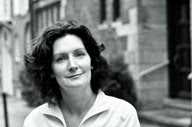
So exciting!! Let's hope Robin wins in September. Still we're so proud. Congrats.
http://www.guardian.co.uk/books/2010/jul/09/us-writers-award-shortlist
Friday, July 9, 2010


Monday, July 5, 2010
Read Local: Philly Girls Rock in Broad Street
It's 1993 and Kit is dating Dale, the front man for a struggling Philly band. Despite the band's lack of success, he's already mastered the rock star persona. He knows how to amuse his groupies. Kit and Dale break-up. Kit is devastated. On her first post-Dale outing, she meets Margo, a woman who also dates a musician with similar skills. After many martinis and the revelation that they're in the same situation, they decide (no, not to open a bar together but) to start a band together.
You go cruising down the Jersey shore,
Getting lucky with the local whores,
I don't care if what they say is true,
I just feel the need to slander you.
According to Weiser, she's putting the finishing touches on the sequel. I'll keep you posted. Until then try to catch her band The Tights playing a local gig. Perhaps if you buy her a drink, she'll give you a hint as to what happens next.
 Who should read this: If you dated someone in the mid-90s who thought he/she was all that and a bag of chips.
Philly Shout Outs: The Khyber, the Trocadero, Bacchanal's, Tower Records, Philly Record Exchange, Electric Love Muffin, etc.
Philly Cred: Weiser and Carla Spataro are co-publishers of Philadelphia Stories literary magazine, PS Books, and they organize the annual "Push-to-Publish" Writing Conference, and the Writers Retreat at Rosemont College, etc.
Next up: Mornings in Jenin.
"You know," Margo said, "these people work in comic book stores and coffee shops and they feel so superior to people like us who have the nerve to get a nine-to-five job." She shook her head in disgust. "Just because they can wear an eyebrow ring to work they think they're fucking artists. What gives them the corner on creativity?"Kit and Margo do start a band; they get gigs; they're on the cover of the City Paper. They experience more success than the old boyfriends' bands do, and faster too. You know what they say: success is the best revenge. But along the way, Kit stumbles--a lot. Being single for the first time in years and being in a band gives her more and more opportunities to make bad decisions. Sex, drugs, and rock and roll bad decisions. As the band’s reputation grows, so does Kit's. You start to wonder if this whole band thing was a bad idea.
I have to admit I wasn't expecting Broad Street to be as racy as it is. What fun to vicariously experience all-nighters and one-night stands and wake up refreshed and guiltless in the morning!
Kit and Margo develop a true friendship through some trial and error as they search for a reliable drummer and wonder what they really want out of this. Weiser captures the drama of putting an all girl band together in the mid-90s. Here's a taste of Broad Street's feminist rock lyrics from "Slander You":
You go cruising down the Jersey shore,
Getting lucky with the local whores,
I don't care if what they say is true,
I just feel the need to slander you.
According to Weiser, she's putting the finishing touches on the sequel. I'll keep you posted. Until then try to catch her band The Tights playing a local gig. Perhaps if you buy her a drink, she'll
give you a hint as to what happens next.Who should read this: If you dated someone in the mid-90s who thought he/she was all that and a bag of chips. Philly Shout Outs: The Khyber, the Trocadero, Bacchanal's, Tower Records, Philly Record Exchange, Electric Love Muffin, etc.
Philly Cred: Weiser and Carla Spataro are co-publishers of Philadelphia Stories literary magazine, PS Books, and they organize the annual "Push-to-Publish" Writing Conference, and the Writers Retreat at Rosemont College, etc.
Next up: Mornings in Jenin.
Monday, June 28, 2010
Local Event: Jennifer Egan, A Visit from the Goon Squad
Jennifer Egan's latest book, A Visit from the Goon Squad, is a collection of stories that revolve around the record industry. There's even an A side and a B side.
At the Central Library, Egan read the first chapter "Found Objects." Sasha is a kleptomaniac out on a date. In the hotel restaurant's bathroom, she discovers an open purse on the floor, a green wallet waiting to be taken. As we follow Sasha through her date and robbery, we travel between this night and sessions with her therapist, Coz.
Egan sites two inspirations while writing the Goon Squad. Proust for his obsession with time and "The Sopranos" for two reasons. The characters are cliches in public, but are nuanced in private, and the characters go from being peripheral characters in one episode to central characters in another.
So she would follow different characters and explore beyond the cliche. It was an exciting process, complete lawlessness as she hand-wrote story after story. Then she typed them up, printed them out, and developed some self-defined rules. In the end she stuck with three:
Even though I'm excited to read A Visit from the Goon Squad, I'll have to wait to the fall. Egan's not local, even if she is a graduate of the University of Pennsylvania and confesses that she occasionally tries to convince her husband to move here--unsuccessfully.
Check out her groovy website.


At the Central Library, Egan read the first chapter "Found Objects." Sasha is a kleptomaniac out on a date. In the hotel restaurant's bathroom, she discovers an open purse on the floor, a green wallet waiting to be taken. As we follow Sasha through her date and robbery, we travel between this night and sessions with her therapist, Coz.
It began the usual way, in the bathroom of the Lassimo Hotel. Sasha was adjusting her yellow eye shadow in the mirror when she noticed a bag on the floor beside the sink that must have belonged to the woman whose peeing she could faintly hear through the vaultlike door of a toilet stall. Inside the rim of the bag, barely visible, was a wallet made of pale green leather. It was easy for Sasha to recognize, looking back, that the peeing woman's blind trust had provoked her: We live in a city where people will steal the hair off your head if you give them half a chance, but you leave your stuff lying in plain sight and expect it to be waiting for you when you come back? It made her want to teach the woman a lesson. But this wish only camouflaged the deeper feeling Sasha always had: that fat, tender wallet, offering itself to her hand -- it seemed so dull, so life-as-usual to just leave it there rather than seize the moment, accept the challenge, take the leap, fly the coop, throw caution to the wind, live dangerously ("I get it," Coz, her therapist, said), and take the fucking thing.And that's where the novel began for Egan. With a wallet in the bathroom. One evening she was having dinner with her mother at a hotel restaurant in NYC and went into the bathroom to discover a very vulnerable wallet. Except Egan didn't steal it. At first, she sympathize with the unknowing woman in the bathroom stall, having been the victim of many such crimes. It set her to thinking about what kind of person would be tempted to take it. At this point, Egan was researching a novel about women who worked at the Brooklyn Navy Yard, but she decided that the next morning she would write about this person. That led to Sasha who led to Bernie Salazer who led to a cast of characters who move from the background to the foreground in different stories. (I wonder if we'll ever see that other book.)
Egan sites two inspirations while writing the Goon Squad. Proust for his obsession with time and "The Sopranos" for two reasons. The characters are cliches in public, but are nuanced in private, and the characters go from being peripheral characters in one episode to central characters in another.
So she would follow different characters and explore beyond the cliche. It was an exciting process, complete lawlessness as she hand-wrote story after story. Then she typed them up, printed them out, and developed some self-defined rules. In the end she stuck with three:
- Each piece had to stand on its own. They could not lean on each other; they could only enhance each other.
- The collection had to have an extreme range of tone.
- There could be no overlap in the stories. Each piece had to be unique.
Even though I'm excited to read A Visit from the Goon Squad, I'll have to wait to the fall. Egan's not local, even if she is a graduate of the University of Pennsylvania and confesses that she occasionally tries to convince her husband to move here--unsuccessfully.
Check out her groovy website.
Thursday, June 24, 2010
Local Author Gets a Nod From Oprah
 Congratulations to local author Robin Black
 . Her debut collection of stories If I Loved You, I Would Tell You This is on O Magazine's Summer Reading List.
I might have to add this to our Read Local Summer Reading List. Has anyone read it?
Sunday, June 6, 2010
Summer Plans: Stay Local, Eat Local, Read Local
This summer I'm planning on staying local. So I'll be spending a lot of time in the pool with my children climbing all over me. When I do get some time to enjoy peace under the sun poolside, I'll be reading local Philadelphia writers.
Perhaps I'll even run into other writers staying local and shopping at the local farmer's market. I'd like to say that I'm a foodie who cooks with fresh seasonal ingredients, but I'm not. That's my husband. I go to the farmers market for the Apple Cider Donuts. Yum. Although I can tell you that when figs are in season, wrap them in some prosciutto and Viola! Perfection. A recipe even I can handle.
 So this is the pile of local writers on my nightstand right now:
, Pam Jenoff
- Broad Street
, Christine Weiser
- Mornings in Jenin: A Novel
, Susan Abulhawa
- Pig Candy: Taking My Father South, Taking My Father Home: A Memoir,
Lise Funderburg
- The Silver Lining Handbook, Matthew Quick
- Thirst
, Ken Kalfus
- and somehow a book of poetry snuck in -- Charles Carr's paradise, pennsylvania.
 You'll recognize some of the names from previous post about readings. Now that school is out and my book tour has slowed down, I have time to catch up on my reading. Let me know who your favorite Philly writers are.
I'm starting with Broad Street - an all girl band in the early 90s. Ah, that'll bring back lots of memories. Look for me by the pool. And Read Local this summer.
Wednesday, June 2, 2010
Susan Abulhawa, Mornings in Jenin

In his introduction, Richard Holmes, owner of Head House Books, said that it was his mother-in-law who first discovered Mornings in Jenin in a London airport. She loved it and gave it to her daughter to read. Her daughter gave it to everyone to read including Richard. The book has been selling twice as many copies as any other book at HHB, because the staff can't stop talking about it.
Susan Abulhawa talked about how she came to write the book. She spoke about Palestinians leaving their homes in 1948, believing it was temporary, merely packing a bag for a few days away. Jewish refugees who arrived from Europe, Russia, America, etc. walked into fully furnished homes - family pictures hung on the wall, fruit bowls still overflowed on the kitchen table.
That image hung in my mind. What could have been going through the Jewish settlers' minds? They have survived through horror, traveled miles and miles to live in peace. But when they walked into these homes, didn't they think of who they were replacing? Did they feel justified because someone had done the same to their homes?
But Mornings in Jenin is not about the Jewish refugees. It is unapologetically the Palestinian story.
Some have criticized Abulhawa for being biased or unbalanced in her portrayal of the Palestinian/Israeli conflict. In her opinion, Palestinians have been made to pay for the sins of the West. Edward Said, she said, believed that the story of the Palestinians isn't heard because they are victims of history’s greatest victims: the Jews.
Abulhawa didn't start out to become a novelist. A combination of things happened. First she traveled to Jenin in 2002 following the 9 day massacre. She arrived just as the camp was opened. For two weeks, no one including the press and human rights organizations had been allowed entry. What she saw there and the stories she heard deeply affected her.
Second, shortly after she returned from Jenin, she was laid off from her job. Her experience inspired her to write create a multi-generational novel about one Palestinian family's experience. She spent four years writing Mornings in Jenin. What started out as a story of two brothers separated in 1948, one being raised Palestinian and the other raised Israeli - a story to illustrate a history of a people- became a very personal story of one family. Abulhawa's characters came alive to her and were no longer symbols of a struggle.
She read two passages from her novel. In this sweet scene, five-year-old Amal sits with her father (Baba).
I could hear the turbulence inside Baba's chest, the protests of his lungs against each inhalation of honey apple tobacco.
"Baba, who do you love more, me or Yousef?"
"Habibti," he began. I couldn't help but smile when he called me that. "I love you both the same," he said.
"How big do you love me?"
"I love you as big as the ocean and all its fishes. As big as the sky and all its birds. As big as the earth and all her trees."
"What about the universe and all its planets? You forgot that part."
"I was getting to it. Be patient," he said, puffing on his pipe. He exhaled, "And I love you bigger than the universe and all its planets."
"Do you love Yousef that much?"
"Yes. As big as the ocean . . . but without all the fishes."
My heart grew with all the fishes, the idea that Baba loved me just a little more. "What about the sky and earth? Do you love him that big but without all the birds and the trees?"
"Yes. But don't tell anyone."
"I won't, Baba, I swear." My heart swelled with the birds now. "What about the universe part?"
"Don't be greedy." He winked at me. "I have to get to work, habibti. Tomorrow."
Habibti. Tomorrow.
 Susan Abulhawa founded the organization Playgrounds for Palestine. Visit the website if you want to help.
Tuesday, May 25, 2010
I Have Been Remiss
I have been remiss in updating the blog, and I must admit it has been for selfish reasons. For the past few months, I have been busy giving readings instead of attending them.
Having your book published is a tremendous event in one's life. Having your book published is embarking on a new career--one that you have not spent years toiling away at in solitude. You must go out and sell your book.
My book was published by a small press and had no bookstore distribution. In other words, my book was only in bookstores where I or someone who liked my book convinced the buyer to put it on the shelf.
This is not a posting of complaint. It is a posting of gratitude for those people -- friends, acquaintances, and strangers -- who made a difference by getting When Love Was Clean Underwear into bookstores so that readers could stumble upon it.
Oddly enough, it was Barnes and Noble that gave me my first bookstore breaks. Their store in Plymouth Meeting was the first to carry my book and I owe this to a stranger. Fellow author Gus Cileone and I briefly met at the Montgomery County Community College Writers Conference last November. After that Gus persuaded his local B&N to carry my book. Later the Community Relations Manager Chris Broome contacted me about participating in their Read Local Books series.
My second B&N success I owe to Tim Clancy (not Tom), a neighbor, who read my book and made sure it was stocked in the Rittenhouse store. He was also helpful in scheduling a reading there. Over sixty people came and my books sold out.
I was at the Big Big Marble as part of their Writers and the Process Series thanks to the encouragement of my friend Don Gordon. It was a lovely evening hosted by Minter Krozter. There, I spoke to aspiring writers who attend writing workshops at the bookstore lead by Minter or her husband poet Hal Sirowitz.
I also owe my publicist Becky Kraemer a big debt. The day she took me on as a client things fell into place. Thank God she has a thing for fledgling authors wandering the marketing landscape without a clue. Without all the local press, I wouldn't have had so many opportunities, like the chance to meet Debbie Rech and read at Head House Books.
My sister Mary Barr Mann set me up at Words in Maplewood, NJ where I met half the town. Afterwards I hung out and we had drinks a few doors down. A great evening. I plan to write more books so I can go back there.
I've learned a lot over the past months. In the future, when opportunities arise I'll have more ways of spreading the word about books I love.
Having your book published is a tremendous event in one's life. Having your book published is embarking on a new career--one that you have not spent years toiling away at in solitude. You must go out and sell your book.
My book was published by a small press and had no bookstore distribution. In other words, my book was only in bookstores where I or someone who liked my book convinced the buyer to put it on the shelf.
This is not a posting of complaint. It is a posting of gratitude for those people -- friends, acquaintances, and strangers -- who made a difference by getting When Love Was Clean Underwear into bookstores so that readers could stumble upon it.
Oddly enough, it was Barnes and Noble that gave me my first bookstore breaks. Their store in Plymouth Meeting was the first to carry my book and I owe this to a stranger. Fellow author Gus Cileone and I briefly met at the Montgomery County Community College Writers Conference last November. After that Gus persuaded his local B&N to carry my book. Later the Community Relations Manager Chris Broome contacted me about participating in their Read Local Books series.
My second B&N success I owe to Tim Clancy (not Tom), a neighbor, who read my book and made sure it was stocked in the Rittenhouse store. He was also helpful in scheduling a reading there. Over sixty people came and my books sold out.
I was at the Big Big Marble as part of their Writers and the Process Series thanks to the encouragement of my friend Don Gordon. It was a lovely evening hosted by Minter Krozter. There, I spoke to aspiring writers who attend writing workshops at the bookstore lead by Minter or her husband poet Hal Sirowitz.
I also owe my publicist Becky Kraemer a big debt. The day she took me on as a client things fell into place. Thank God she has a thing for fledgling authors wandering the marketing landscape without a clue. Without all the local press, I wouldn't have had so many opportunities, like the chance to meet Debbie Rech and read at Head House Books.
My sister Mary Barr Mann set me up at Words in Maplewood, NJ where I met half the town.
Afterwards I hung out and we had drinks a few doors down. A great evening. I plan to write more books so I can go back there.I've learned a lot over the past months. In the future, when opportunities arise I'll have more ways of spreading the word about books I love.
Subscribe to:
Posts (Atom)