Monday, November 2, 2026

Emily St. John Mandel Gives Me Hope for Humanity

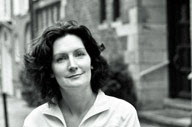
Last week I went to see Emily St. John Mandel at Old Pine Church in Society Hill (a Barnes & Noble Philly event). Her new book “Exit Party,” which she describes as her best and most ambitious novel, is out. It takes place in 2031 Los Angeles. She gives us Side A and Side B, two different timelines of what is possible. In the first, the civil war has just ended. In the second, the country is under totalitarian rule.

Mandel says it took her about three and a half years to write the book and what began as a speculative novel—people being disappeared by masked men in unmarked vans—had become by the time she finished, the nightly news. But she believes that “the worst moments in our country's life will not last forever.”

One of her favorite quotes from the book is “We were Americans, which is another way of saying that chaos felt like home.”

I think a lot of us feel this way, and I don't know what the midterm elections will bring. More chaos? A path back to “normal”? Timelines, she says, hinge on events such as elections.

Mandel spoke of a conversation she had with the writer and filmmaker Sebastian Junger. They talked about the difference between “Station Eleven” and Cormac McCarthy's “The Road.” Junger said that McCarthy's story is implausible because in it there was no community. There is no hope. Mandel’s is plausible because in his opinion, “We form communities in dark moments.”

When beginning to write a new book, including “Exit Party,” Mandel said she needs to decide if she wants to spend several years in this fictive world and its people she’s about to create. Three plus years is a lot of time. Always she chooses to include hope and joy, in part because of plausibility. 

Wherever her imagination takes her, she is still capturing what it is to be human. And to be human is to have hope and to seek joy.  

An audience member asked if she had any advice for beginning writers. She said, “Don't be afraid to write a horrible first draft.” For the most part she doesn't write an outline. She just delves in and the first draft becomes the raw material for what the novel will become. 

Her second piece of advice: learn to write under any circumstances.

Even in chaos Mandel does this. Maybe especially in chaos. 

Friday, February 11, 2011

LYNN READS A BOOK: The Bird House by Kelly Simmons

LYNN READS A BOOK: The Bird House by Kelly Simmons

Lynn Rosen writes about local author Kelly Simmons and her new novel The Bird House.

Saturday, December 18, 2010

Literary Mama : Blog : Blog Book Review: Chosen

Literary Mama : Blog : Blog Book Review: Chosen

Read my review of local author Chandra Hoffman's Chosen on Literary Mama's blog.

Tuesday, December 7, 2010

Saturday, October 23, 2010

Local Event: Nicole Krauss - Great House

This Thursday, I joined Lynn Rosen's Sneak Peak class for Nicole Krauss's reading at the Central Library on the Parkway.  Everyone in Lynn's class has already finished reading the newly-released Great House, a fact that surprised even Krauss.  (The class reads advance review copies of soon-to-be-published books.)

I saw Nicole Krauss when she was touring for History of Love.  This time around she seems more comfortable in front of a crowd.   Instead of reading from Great House, Krauss read from something she had prepared about the making of the novel.  Not only was it an exercise that addressed one of her obsessions (memory), but it anticipated those how did you write this questions.  When the final proof of the book is at the publisher, she says, it's like a door is closed.  Locked.  And soon the writer herself begins to forget all that went into the making of the story, how it came to be, the decisions involved, the discarded ideas.  The door is closed and the writer has lost the key.

Great House started as the short story "The Young Painters" published in The New Yorker, in which a New York novelist works at a desk she inherited from a Chilean poet after he was disappeared.  A year after she finished the story she went back and asked, what would happen if the desk was taken away from the novelist?

She had three elements, three obsessions going in -- a desk, a shark and a reassembled room.  She knew there would be four voices and that in some way they were going to connect. There was no outline, no structure. 

Writing for Krauss resembles anthropologists searching for dinosaurs.  The crew start out following their intuition about where a dinosaur might have fallen.  They walk back and forth looking for a claw or a knuckle.  When they find something, they dig until they uncover the dinosaur they've been walking back and forth on top of all along.  That's her process.  Follow her obsession, her intuition, until she uncovers the story she's been walking on all along.


In listening to her describe her process.  You might think, oh this is too intellectual. There's no emotion. This sounds suspiciously like a plotless endeavor.   But you would be wrong.  Now, I haven't read Great House yet.  (The Sneak Peak class thoroughly endorses it.)  Her second novel, History of Love, is one of my all-time favorite novels.  The character of Leo Gursky is one of the most memorable and lovable people I have met.  As a woman in the audience confessed, she sees Leo in a coffee shop whenever someone spills something and thinks that person wants to be noticed.  Krauss's obsessions do meet up and create a novel you want to keep reading. 

If you missed this reading, look for the podcast.  It takes a bit for the library to get them up.  I just listened to Jonathan Franzen's reading and the quality of the recording is very good.  Of course it's not the same as being there and having the opportunity to ask a question if you are so moved, then standing in line to get your book signed and being a blithering idiot in front of your literary idol, but it's good.

Monday, September 13, 2010

Read Local: We're Always Reading In Philadelphia

Well the summer's over.  I wanted to take a moment to thank all of you for reading along and supporting local writers, especially in this lousy economy.  Over the past few weeks, I've received some feedback  about Philly Word of Mouth's Read Local that I want to share it with you.
There so much great talent in Philly - both writers and lawyers.   I know now that if I'd worked at Cozen O'Connor, I'd be a Pulitzer Prize winner. --John Grisham

Philly Word of Mouth is the absolute best.   This summer's Read Local reading list was 50% women.  That's 12% more representation than the New York Times.--Jodi Picoult

Amen, Sister! --Jennifer Weiner

Philly's Lit Scene rocks.  Brooklyn sucks.  We're moving.  What's the admission's number at The Philadelphia School? --Nicole Krauss and Jonathan Safran Foer

This summer's Read Local program was a boon to the local economy. Who knew!  When you buy local writers' books, they spend like they've never had money before.  The Pennsylvania Liquor Control Board alone reported a 10% increase in revenue.
  --Mayor Michael Nutter

Even the undead read in Philly.  What a great town!  --Stephanie Meyer
Keep reading and sending your comments.  Remember the fall is the perfect time to catch up on your summer reading. 

Read Local!

Sunday, September 5, 2010

Book review: 'Let's Take the Long Way Home' by Gail Caldwell - latimes.com

Book review: 'Let's Take the Long Way Home' by Gail Caldwell - latimes.com

If I'm not mistaken, Judith Klein is talking about the Lombard Swim Club:
One evening, I accidentally left the book behind on a chair at an upscale Philadelphia swim club famous for its copious open bar and hard-drinking regulars. To my considerable annoyance, it disappeared, and its fate remains unknown.